

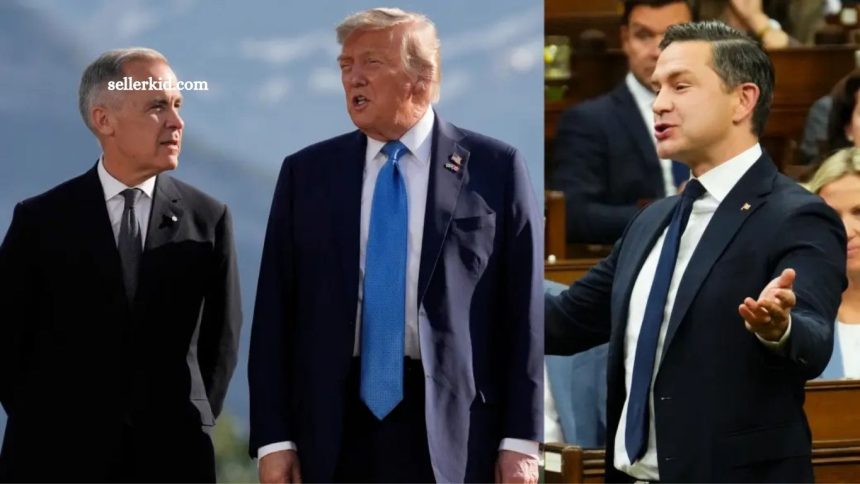
Prime Minister Mark Carney is set to travel to Washington, D.C., on Monday for a high-profile meeting with U.S. President Donald Trump on Tuesday. This visit comes at a crucial time, as both countries prepare for a review of the Canada-U.S.-Mexico trade agreement (CUSMA).
According to a statement from Carney’s office, the leaders will discuss shared priorities in strengthening economic and security ties between Canada and the United States. The meeting is being closely watched amid growing calls for renegotiating aspects of the trade agreement and addressing tariffs on Canadian goods.
Read More: Inside Russia’s Campaign of Terror in Kyiv: Why the Bombings Continue
Carney’s Travel Schedule and Preparations
Before departing for Washington, Carney met with Alberta Premier Danielle Smith in Ottawa. His office confirmed that he would leave for the U.S. at 4:30 p.m. Eastern and arrive in D.C. around 6 p.m. Eastern.
Premier Smith publicly wished Carney well, expressing hope for a renewed Canada-U.S. trade agreement. “I’d love to see a renegotiated Canada-U.S. free trade agreement sooner rather than later,” she said.
Meeting Focus: Economic and Security Ties
Carney’s office highlighted that the meeting with President Trump would focus on shared priorities, including economic growth, security cooperation, and trade relations. The discussions are expected to cover sectoral tariffs on Canadian steel, aluminum, and automobiles, issues that have been a point of contention between the two nations.
White House press secretary Karoline Leavitt confirmed that President Trump “looks forward” to hosting Carney. She added, “I’m sure trade will be a topic of discussion tomorrow, and all of the other issues that are facing both Canada and the United States.”
Trump on Tariffs and Trade
During a brief statement in the Oval Office, President Trump said that Carney is “coming to probably talk about tariffs,” though he did not indicate whether he would adjust the current tariffs on Canadian goods.
Trump emphasized the success of tariffs in increasing revenue and encouraging domestic investment. “We’re a really rich country again… But more importantly, I use tariffs to stop wars,” he added.
The president’s comments underline the high stakes of the meeting, as Canada seeks relief from tariffs while the U.S. continues to prioritize its economic and strategic interests.
Political Reactions in Canada
Carney’s visit has sparked reactions from Canadian political leaders. Conservative Leader Pierre Poilievre shared a letter urging Carney to secure a favorable deal for Canada. He stressed, “We only expect you to keep your promises. If you return with excuses, broken promises, and photo ops, you will have failed our workers, our businesses, and our country.”
Poilievre also criticized what he perceived as a symbolic rather than substantive visit. “Surely after promising to negotiate a win, to have a deal by July 21, the prime minister is not flying all the way to Washington, D.C., just to have lunch,” he said during a House of Commons session.
Canada-U.S. Trade Minister Dominic LeBlanc responded by defending the importance of the meeting. “Was the leader of the Opposition suggesting if the president of the United States invites you to go to Washington for a meeting and a working lunch, we should have just said no and hung the phone up?” LeBlanc asked rhetorically.
Poilievre countered, “We’re suggesting he actually keep his promise and negotiate a win!”
Canada’s Trade Position with the U.S.
Carney’s office emphasized that Canada is in a strong trading position. “Canada has the lowest average tariff rate of any American trading partner, with 85% of Canada’s trade with the U.S. being tariff-free,” the statement said.
LeBlanc also noted that Canada is “currently in the best position of any major trading ally of the United States.” He added that Carney would be discussing sectoral tariffs on Canadian steel, aluminum, and automobiles during his meeting with Trump.
The Role of CUSMA in the Discussions
Carney’s visit coincides with preparations for the upcoming review of the Canada-U.S.-Mexico trade agreement. Both Canada and the U.S. recently announced public consultations ahead of the review, which is scheduled for next year.
The U.S. Trade Representative will conduct 45 days of public consultations before the formal review process begins. These consultations will provide stakeholders an opportunity to offer input on trade policies, tariffs, and areas for renegotiation.
The review aims to strengthen trade relations, address economic concerns, and ensure fair treatment for Canadian exporters. Carney’s discussions with President Trump are expected to help shape Canada’s negotiating position in the CUSMA review.
Key Issues Likely to Be Discussed
- Trade Balance – Discussions will focus on maintaining balanced trade relations between the nations.
- Tariffs on Steel and Aluminum – These tariffs have been a long-standing point of contention and are expected to be a priority topic.
- Automobile Trade – The auto sector remains heavily impacted by U.S. tariffs, prompting calls for renegotiation.
- Economic Cooperation – Both countries aim to enhance economic and security collaboration.
Frequently Asked Questions
Why is Mark Carney visiting Washington?
Carney is visiting to meet U.S. President Trump and discuss trade, tariffs, and the upcoming CUSMA review.
When is the meeting scheduled?
Carney will meet Trump on Tuesday, following his arrival in Washington on Monday evening.
What are the main topics of discussion?
Key topics include tariffs on steel, aluminum, and automobiles, trade negotiations, and economic and security cooperation.
How is Canada positioned in trade with the U.S.?
Canada enjoys the lowest average tariff rate among U.S. trading partners, with 85% of trade being tariff-free.
What is CUSMA?
The Canada-U.S.-Mexico Agreement governs trade among the three countries and is scheduled for a review next year.
Conclusion
Prime Minister Mark Carney’s visit to Washington comes at a critical time for Canada-U.S. trade relations. With tariffs still in place on key Canadian goods and the upcoming CUSMA review, the meeting with President Trump offers an important opportunity to negotiate favorable terms and strengthen bilateral economic ties. Political leaders in Canada are closely monitoring the visit, emphasizing the need for tangible results rather than symbolic gestures.