

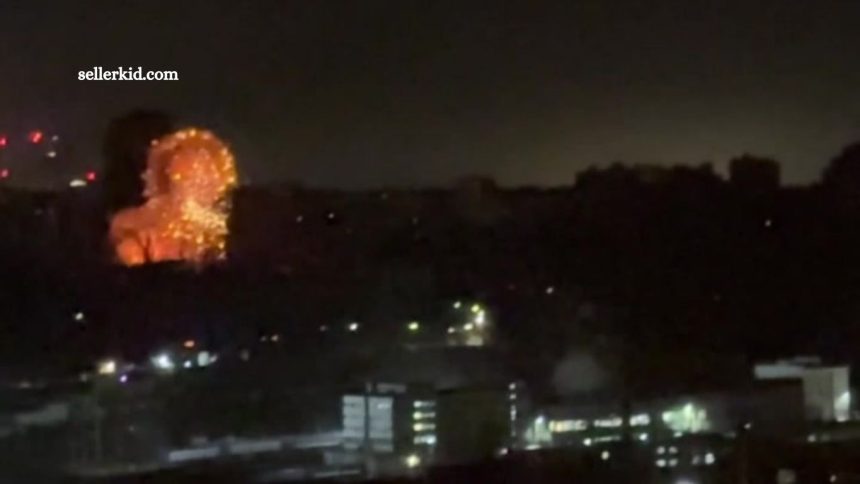
Russia launched a devastating assault on Ukraine overnight, killing at least six people and injuring 35. According to Ukraine’s president, approximately 430 drones and 18 missiles targeted the country in a deliberate and calculated strike “aimed at causing maximum harm to people and civilian infrastructure.”
Despite Ukraine’s air force shooting down most of the missiles and drones, falling debris and fires caused severe damage across nine districts of Kyiv, a city of nearly three million. High-rise apartments, schools, medical facilities, and administrative buildings were all affected.
“At that moment, you don’t know what to do first: save yourself, your child, or run to help people, because so many people were screaming and needed help,” said Anastasia, 29, whose apartment block was hit.
Read More: This is a big deal’: Health Canada approves 1st drug to slow Alzheimer’s disease
Timing Amid Diplomatic Talks
The attacks came just two days after Russia’s foreign ministry indicated it was ready to resume direct talks with Ukraine in Istanbul. An official told TASS that “the ball is in Ukraine’s court,” signaling Moscow’s readiness for negotiation.
Yet, while Russia presents a facade of diplomatic goodwill to the United States, it continues to escalate its attacks on Ukraine. Nearly four years since the invasion, the Kremlin maintains its maximalist ambitions, targeting not only military objectives but also civilian infrastructure.
President Zelensky confirmed that Ukraine is responding to these strikes with “long-range strength” and called for increased international sanctions against Russia.
The Human Toll
The assaults hit residential buildings directly, despite Russia’s claims of avoiding civilian areas. Mariia Kalchenko, a 46-year-old volunteer rescue dog handler, narrowly survived after her building was hit.
“I didn’t hear anything, I just realised that my hair was on fire,” she recounted, highlighting the sudden and terrifying nature of the strikes.
In the southern Odesa region, Russian drones struck a busy street on market day in Chornomorsk, killing two people and injuring 11 others, including a 19-month-old girl. The regional military administration chief, Oleh Kiper, reported the casualties.
Russia’s Denials vs. Reality
Moscow continues to deny targeting civilian areas. The Russian Defense Ministry claimed its overnight strike focused on “military-industrial and energy facilities.”
However, analysts and observers argue that the attacks deliberately target civilian infrastructure to break public morale. Emergency crews in Kyiv reported fires in apartment blocks, debris strewn across streets, and vehicles set ablaze. Eight out of the city’s ten districts suffered damage.
Natia Seskuria, an associate fellow at the Royal United Services Institute (RUSI), explained that the “systematic” targeting of civilian infrastructure is a central element of Russia’s strategy.
“The underlying calculation is that a war-weary society subjected to sustained attacks might exert pressure on the government to accept almost any settlement that promises an end to hostilities,” she said.
So far, this strategy has failed. Ukrainians have shown remarkable resilience and determination, resisting Moscow’s attempts to demoralize the population.
The Bigger Picture
Friday’s attack marked the largest strike on Kyiv in nearly three weeks. Recent assaults have focused on electricity infrastructure, aiming to destabilize the country ahead of the harsh winter months.
Millions of Ukrainians now face one of the toughest winters in years. Humanitarian organizations are racing to provide essentials, but the scale of need is enormous. The International Federation of Red Cross and Red Crescent Societies (IFRC) warned that many people entering winter have “no financial buffer” to support themselves.
“Almost four years of conflict have eroded people’s resources. Many families are entering this winter with no financial buffer – seven out of ten people said they don’t have any savings left,” said Jaime Wah, Deputy Head of Delegation for IFRC in Ukraine.
Frequent power cuts leave neighborhoods in darkness, cutting heating and forcing hospitals to rely on emergency power. Vulnerable populations in high-rise buildings face isolation without elevators, heat, or food and medicine for extended periods.
Patterns of Deliberate Cruelty
Experts argue that Russia’s attacks are designed to maximize civilian suffering. Keir Giles, a fellow at Chatham House, highlighted the historical continuity of Moscow’s tactics:
“That’s the principle we saw applied in Syria, in Chechnya and in countless other conflicts dating back decades and centuries. Ukraine is the victim of Russia’s attempts to demoralize its victims through inhumanity.”
Giles emphasized that the strikes on maternity hospitals, nurseries, and other civilian targets are not accidental but part of a deliberate strategy to inflict psychological and social damage.
Contradictions in Russia’s Diplomacy
Despite these attacks, Russia maintains it is open to resuming talks. Foreign ministry official Alexei Polishchuk said on Wednesday that Moscow is ready to restart negotiations in Istanbul. However, no face-to-face meetings have occurred since the Turkish summit on July 23.
Recent diplomatic overtures, including a proposed summit between Vladimir Putin and former US President Donald Trump, have failed due to Moscow’s rigid demands. The diplomatic push to end the war has yet to yield meaningful results, leaving millions of Ukrainians exposed to ongoing violence.
Ukraine’s Resilience
Even in the face of relentless attacks, Ukraine has demonstrated remarkable resilience. President Zelensky’s calls for stronger sanctions and military support underscore the determination to resist Russian aggression.
Analysts agree that Moscow’s strategy relies on causing maximum civilian suffering in hopes of pressuring the Ukrainian government. Yet, the sustained resistance shows that, for now, these tactics have not succeeded.
Humanitarian Challenges
As winter approaches, the humanitarian crisis intensifies. Emergency responders face enormous challenges in providing aid to affected areas. Power outages, destroyed infrastructure, and the psychological toll of ongoing attacks exacerbate the struggle for survival.
The IFRC stresses that with limited resources and growing needs, the scale of the humanitarian crisis is unprecedented. Millions of families are entering winter with little to no support, facing harsh conditions without adequate heating, food, or medical care.
Frequently Asked Questions
What happened in Kyiv during the latest Russian attacks?
Russia launched a large-scale assault on Ukraine overnight, using approximately 430 drones and 18 missiles. The strikes killed at least six people and injured 35, damaging residential buildings, schools, medical facilities, and administrative offices across nine districts.
Did Ukraine manage to defend itself against the attacks?
Yes, Ukraine’s air force intercepted most of the drones and missiles. However, falling debris and fires still caused significant damage to buildings and infrastructure.
Were civilians targeted intentionally?
While Russia claims it targets military and energy infrastructure, analysts argue that many strikes deliberately hit civilian areas to weaken morale and pressure the Ukrainian population.
How has the Ukrainian government responded?
President Zelensky confirmed that Ukraine is responding with “long-range strength” and has called for increased international sanctions against Russia. Emergency crews are also working to fight fires and assist affected residents.
How do these attacks affect ordinary Ukrainians?
The attacks cause injuries, fatalities, and destruction of homes. Frequent power cuts and heating failures particularly affect vulnerable populations, including the elderly and families in high-rise buildings. Millions are entering winter without sufficient resources to cope.
Has Russia shown any willingness to negotiate peace?
Russia has expressed readiness to resume talks with Ukraine in Istanbul, but no face-to-face meetings have occurred since July. Recent diplomatic efforts, including proposals for summits, have so far failed to produce results.
Conclusion
The latest wave of Russian attacks on Kyiv underscores the Kremlin’s willingness to use terror as a tool of war. Despite diplomatic overtures and claims of targeting military infrastructure, civilians remain in the crossfire.
Ukraine’s response, both militarily and diplomatically, highlights the resilience and determination of its people. Yet the human cost is immense, with communities struggling to survive amid destruction, power outages, and the uncertainty of winter.